
Fixing WP‑CLI “eval()’d code” Parse Errors on PHP 8.4 During “wp db import”
Seeing a WP-CLI parse error referencing Runner.php and “eval()’d code” when importing a database? It’s usually not your SQL file—it’s WP-CLI stumbling over wp-config.php (syntax, BOM/encoding, or config logic) or a WP-CLI/PHP 8.4 mismatch. Here’s the quickest path to diagnose and fix it.

Force a 404 With a CloudFront Function (Always)
Need everything behind a CloudFront distribution to return “Not Found” instantly—without touching your origin? Here’s a tiny CloudFront Function you can attach at Viewer Request to short-circuit all traffic and consistently respond with a 404 (plus no-cache headers).

HTTP Basic Auth Is Dead
HTTP Basic Auth used to be the go-to “quick gate” for staging sites and temporary protection. In 2026 it’s functionally broken: modern browser behavior is moving away from reliable prompt-based auth, and WordPress speculative loading now triggers background requests that make Basic Auth unreliable in real-world deployments.
WordPress 6.8 Speculative Loading Can Break HTTP Basic Auth
WordPress 6.8’s new Speculative Loading feature can trigger background requests that break HTTP Basic Auth–protected staging sites. Disabling speculative loading may help — but real-world testing shows it’s not always sufficient, and it may be time to rethink Basic Auth as a staging gate.
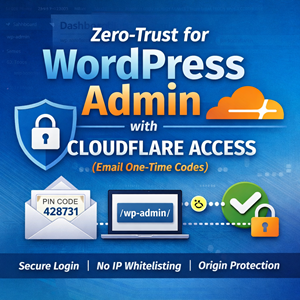
Zero‑Trust for WordPress Admin with Cloudflare Access (Email One‑Time Codes)
Stop chasing changing IP addresses and reduce WordPress admin login friction by placing Cloudflare Zero Trust (Access) in front of /wp-admin and wp-login.php using one-time email codes—without setting up Google or Microsoft SSO.

Enabling Binary Logging on Amazon Aurora Serverless (MySQL) for Fivetran
Getting a Fivetran MySQL connector error about SHOW MASTER STATUS? Here’s how to enable Aurora Serverless binary logging (the right way), set binlog retention, validate your configuration, and finish setup with a clean re-sync.

GitGraph for Release and Branch Strategy with Mermaid
Mermaid GitGraph diagrams make branching strategy easy to explain and hard to misinterpret. This guide shows trunk-based development, release branches, hotfixes, backports, and GitFlow patterns—with tags and “merge forward” rules you can copy into your engineering docs.
Fixing WP-CLI “Some code is trying to do a URL redirect” Warnings
WP-CLI warnings about unexpected redirects usually come from plugins running browser-only logic during CLI bootstrap. Here’s how to identify the culprit, run commands cleanly, and apply an update-safe MU-plugin fix.
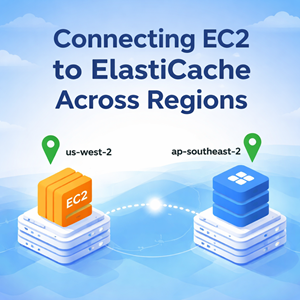
Connecting an EC2 Instance in us-west-2 to ElastiCache (Redis/Valkey) in ap-southeast-2
Need to connect an EC2 instance in us-west-2 to an ElastiCache Redis/Valkey cluster in ap-southeast-2? This guide walks through the only safe way to do it—private networking—covering inter-region VPC peering (or Transit Gateway), routing, security group rules for port 6379, DNS resolution, and a quick checklist for troubleshooting timeouts.

Gantt Charts for Infra Work with Mermaid
Mermaid Gantt charts are a simple way to plan infra work: phases, dependencies, milestones, parallel tasks, and rollback lanes. This guide shows practical patterns for maintenance windows, migrations, and staged rollouts with copy/paste examples.
A DevOps Thanksgiving
As everyone heads home for turkey and pie, someone is still on call watching graphs, pipelines, and pagers. This light-hearted Thanksgiving poem tips its hat to the DevOps and SRE folks who ride out Black Friday and Cyber Monday so the rest of the world can shop in peace.

Debian: The Quiet Giant of the Linux World
If you’ve used Linux in the last 20 years, there’s a good chance you’ve met Debian—even if you didn’t realize it. This is the story of how a college student’s manifesto became one of the most quietly influential projects in the open-source world.
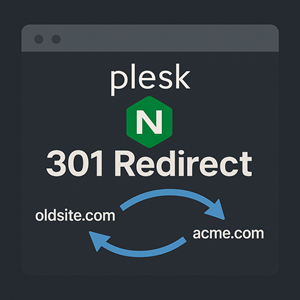
How to Add a Redirect in Nginx on a Plesk Server
Learn how to set up fast, server-level redirects on a Plesk server using Nginx “Additional nginx directives,” including full-domain redirects to acme.com, single-URL redirects, and common gotchas to avoid.

Domain Registration Explained: What It Means for Business Owners, Developers, and Network Engineers
When domain registration works, nobody thinks about it. When it fails, websites vanish, email stops, and trust evaporates. This article explains what a domain really is, why it matters, and how business owners, developers, and network engineers each see the same name from very different layers of the stack.

CloudFront Flat-Rate Plans: When AWS Bundles Are Actually a Good Deal
AWS finally did something nice with CloudFront pricing: flat-rate plans that bundle CDN, WAF, DNS, logging, and S3 credits into one predictable monthly bill. In this article we break down what each plan really includes, where the fine print bites, and how to decide if flat-rate actually saves money for your site.

Fixing “400 Bad Request – Request Header Or Cookie Too Large” on WordPress Sites (Plesk + Nginx)
Seeing “400 Bad Request – Request Header Or Cookie Too Large” on your WordPress site running on Plesk with Nginx? This guide explains what the error really means, how oversized cookies trigger it, how to fix the root cause in WordPress, and when it makes sense to adjust Nginx header limits.
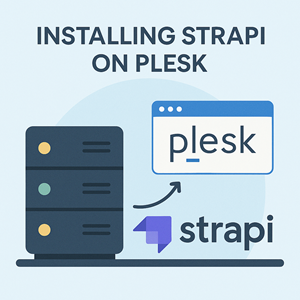
Installing Strapi on a Plesk Server (Ubuntu 24.04) with NVM, PM2, and Nginx
Strapi is a popular open-source headless CMS that lets you model content, manage it through a web admin, and expose it over APIs. In this guide we show how to run Strapi on a Plesk server (Ubuntu 24.04) using NVM, PM2, and Nginx, and how to configure ports so you can host multiple Strapi instances on the same box.
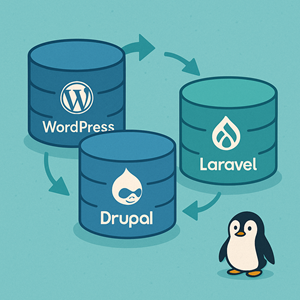
Database Migrations in WordPress, Drupal, and Laravel: Same Problem, Different Worlds
Database migrations mean very different things in WordPress, Drupal, and Laravel. In this article we compare how each platform handles schema changes, configuration, and environment moves—and what that means for your deployment workflow.
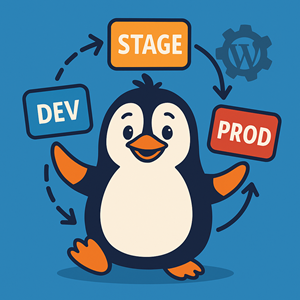
WordPress Database Migrations: Strategies, Tools & Anti-Patterns
WordPress hides most of the database work… until you move a site, add custom tables, or keep multiple environments in sync. This article walks through how WordPress handles schema changes, what you can control as a developer, the tools that help, and the migration anti-patterns to avoid.
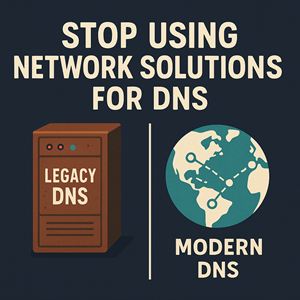
Stop Using Network Solutions for DNS (Seriously)
Network Solutions may have history, but as a DNS provider it’s stuck in the past. From a slow, clunky control panel and upsell-heavy “Premium DNS” to missing Anycast by default, broken apex/CNAME patterns, weak automation, and ticket-driven IPv6, we treat seeing Network Solutions in the NS records as a sign: it’s time to move.