
Fixing WP‑CLI “eval()’d code” Parse Errors on PHP 8.4 During “wp db import”
Seeing a WP-CLI parse error referencing Runner.php and “eval()’d code” when importing a database? It’s usually not your SQL file—it’s WP-CLI stumbling over wp-config.php (syntax, BOM/encoding, or config logic) or a WP-CLI/PHP 8.4 mismatch. Here’s the quickest path to diagnose and fix it.

Force a 404 With a CloudFront Function (Always)
Need everything behind a CloudFront distribution to return “Not Found” instantly—without touching your origin? Here’s a tiny CloudFront Function you can attach at Viewer Request to short-circuit all traffic and consistently respond with a 404 (plus no-cache headers).
HTTP Basic Auth Is Dead
HTTP Basic Auth used to be the go-to “quick gate” for staging sites and temporary protection. In 2026 it’s functionally broken: modern browser behavior is moving away from reliable prompt-based auth, and WordPress speculative loading now triggers background requests that make Basic Auth unreliable in real-world deployments.
WordPress 6.8 Speculative Loading Can Break HTTP Basic Auth
WordPress 6.8’s new Speculative Loading feature can trigger background requests that break HTTP Basic Auth–protected staging sites. Disabling speculative loading may help — but real-world testing shows it’s not always sufficient, and it may be time to rethink Basic Auth as a staging gate.
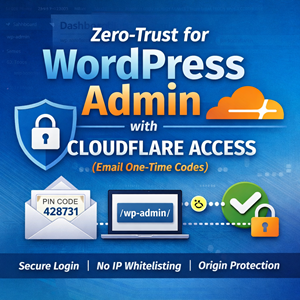
Zero‑Trust for WordPress Admin with Cloudflare Access (Email One‑Time Codes)
Stop chasing changing IP addresses and reduce WordPress admin login friction by placing Cloudflare Zero Trust (Access) in front of /wp-admin and wp-login.php using one-time email codes—without setting up Google or Microsoft SSO.

Enabling Binary Logging on Amazon Aurora Serverless (MySQL) for Fivetran
Getting a Fivetran MySQL connector error about SHOW MASTER STATUS? Here’s how to enable Aurora Serverless binary logging (the right way), set binlog retention, validate your configuration, and finish setup with a clean re-sync.

GitGraph for Release and Branch Strategy with Mermaid
Mermaid GitGraph diagrams make branching strategy easy to explain and hard to misinterpret. This guide shows trunk-based development, release branches, hotfixes, backports, and GitFlow patterns—with tags and “merge forward” rules you can copy into your engineering docs.
Fixing WP-CLI “Some code is trying to do a URL redirect” Warnings
WP-CLI warnings about unexpected redirects usually come from plugins running browser-only logic during CLI bootstrap. Here’s how to identify the culprit, run commands cleanly, and apply an update-safe MU-plugin fix.

Connecting an EC2 Instance in us-west-2 to ElastiCache (Redis/Valkey) in ap-southeast-2
Need to connect an EC2 instance in us-west-2 to an ElastiCache Redis/Valkey cluster in ap-southeast-2? This guide walks through the only safe way to do it—private networking—covering inter-region VPC peering (or Transit Gateway), routing, security group rules for port 6379, DNS resolution, and a quick checklist for troubleshooting timeouts.

Gantt Charts for Infra Work with Mermaid
Mermaid Gantt charts are a simple way to plan infra work: phases, dependencies, milestones, parallel tasks, and rollback lanes. This guide shows practical patterns for maintenance windows, migrations, and staged rollouts with copy/paste examples.
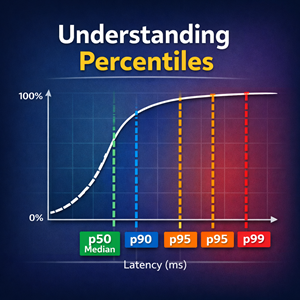
Min, Max, Mean, Average, P90, P95, and P99: What They Mean (and When to Use Them)
Percentiles like p90, p95, and p99 describe how slow things get for the “worst” slice of requests—something the mean often hides. This guide explains min, max, mean/average, and percentiles in plain language, plus when to use each in monitoring and SLOs.

Flowcharts Beyond the Basics with Mermaid
Go past “boxes and arrows” with Mermaid flowcharts. Learn subgraphs, layout tricks, reusable styling with classDefs, meaningful edge labels, link types, and a real-world deploy + drain example you can reuse in future posts.

Turning Text into Diagrams: An Introduction to Mermaid Flowcharts
Mermaid lets you turn plain text into clean, versionable diagrams that live right alongside your docs and code. In this post we walk through the basics of Mermaid flowcharts and show how to embed them in your blog or documentation, with practical examples you can copy and paste.
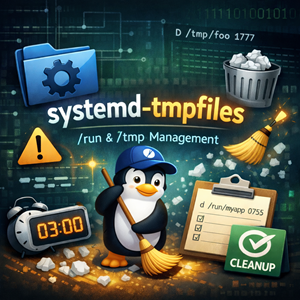
systemd-tmpfiles: The Unsung Janitor of /run and /tmp
How tmpfiles rules create runtime directories, enforce permissions, and clean up old files—plus safe patterns and practical examples.
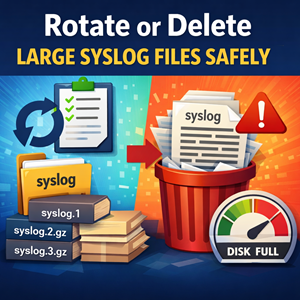
Rotate or delete an overgrown syslog file (safely)
If your /var/log/syslog (Debian/Ubuntu) or /var/log/messages (RHEL/CentOS/Alma/Rocky) has ballooned to multiple gigabytes, you’re usually seeing one of two things: a service spamming logs, or log rotation not running. The good news is you can reclaim space safely without breaking logging — as long as you avoid the classic trap of deleting a file that a daemon still has open. In this guide, we’ll walk through the safest options: rotating with logrotate, truncating in place, recovering space after an accidental rm, and (if needed) vacuuming systemd’s journal.
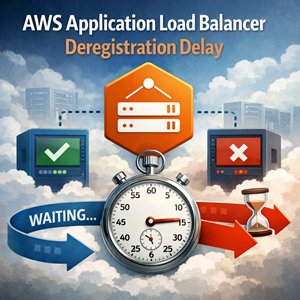
Deregistration Delay on AWS Application Load Balancers (ALB)
Learn what deregistration delay does in AWS Application Load Balancer target groups, how to configure it (Console/CLI/IaC), and recommended defaults for EC2 Auto Scaling, ECS, and EKS to reduce deploy and scale-in errors.
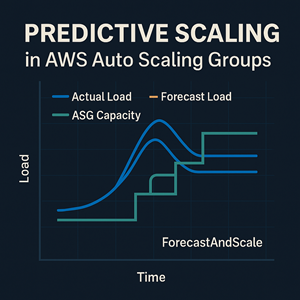
Predictive Scaling in AWS Auto Scaling Groups
AWS Predictive Scaling for EC2 Auto Scaling Groups forecasts your future demand from historical CloudWatch metrics and scales out ahead of time—ideal for workloads with daily or weekly traffic patterns. This article explains how it works, what it does (and doesn’t) do, and how to use it effectively alongside dynamic scaling.
systemd-cat: Logging to the Journal from the Command Line
systemd-cat is a simple way to route command output and pipelines into journald, making scripts and one-off maintenance runs searchable with journalctl.

Recording Terminal Sessions with the script Command
The classic Unix script command records your terminal sessions to a file—perfect for change logs, incident notes, reproducible runbooks, and support handoffs (as long as you treat the output like sensitive data).

Getting Started with GitHub CLI (gh): GitHub From Your Terminal
GitHub’s web UI is great, but it can feel slow when you live in a terminal. In this guide we introduce the GitHub CLI (gh), walk through installation and authentication, and show a few everyday commands that bring issues and pull requests straight into your shell.