Understanding RTO And RPO For Managers
When a key system suddenly goes down, you’re not looking for a technical root cause—you’re trying to understand impact: time, money, and trust. Concepts like Recovery Time Objective (RTO) and Recovery Point Objective (RPO) give managers a clear, non-technical way to talk about how long the business can afford to be offline and how much data it can safely risk.
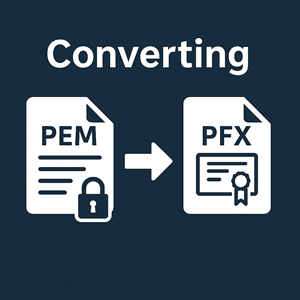
Converting AWS ACM PEM Certificates to PFX for Windows IIS
When AWS Certificate Manager hands you a bundle of PEM files and your Windows admin demands a .pfx, it can feel like two different worlds colliding. In the cloud and Linux ecosystem, PEM is the natural format for TLS: simple text files that are easy to script, inspect, and deploy. Windows and IIS, on the other hand, live in a certificate-store universe where PFX rules. In this article we walk through the quick OpenSSL conversion from PEM to PFX, then dig into why these formats exist, why AWS only gives you PEM, and what you gain (and lose) when you move everything into a .pfx file.
Beyond Apache and Nginx: A Brief History of Web Servers and the Unsung Daemons
When we talk about web servers, the story usually stops at Apache and Nginx. But the web was shaped by a long line of lesser-known daemons—from thttpd and lighttpd to Zeus, Cherokee, Caddy, and H2O—that quietly pioneered performance, automation, and new HTTP protocols behind the scenes.
Apache vs Nginx: A Tale of Two Web Servers
Apache and Nginx power a huge share of the modern web, but they were born in very different eras to solve very different problems. This article traces their histories from NCSA HTTPd and the C10k problem through to today’s hosting stacks, then compares their architectures, strengths, weaknesses, and ideal use cases.
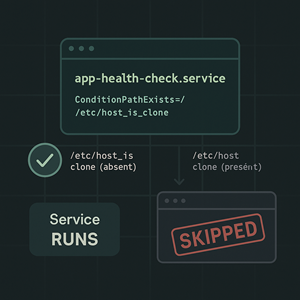
Using ConditionPathExists and Friends in systemd Units
Systemd can do more than just start and restart services. With unit conditions like ConditionPathExists, you can make services environment-aware: skip jobs on cloned hosts, only run backups when a volume is mounted, or gate first-boot tasks — all without shell wrappers.

How to Export a DNS Zone File from Plesk (for Migrations, Backups, and Audits)
Need a clean DNS zone file out of Plesk for a migration or backup? In this guide, we walk through exporting zone files via the Plesk UI with the Transfer of DNS Records extension and directly from the server’s BIND configuration, with notes on common pitfalls and how to use the exported file.

Using PHP APCu on Plesk: Installation, Tuning, and Pitfalls
APCu is a lightweight in-memory cache for PHP that can dramatically cut database and API load on Plesk-based servers. In this guide we walk through what APCu is, how to install it against Plesk’s PHP builds, how to enable and tune it per domain, and what pitfalls to watch for so you don’t accidentally starve your VPS of memory or end up with a thrashing cache.
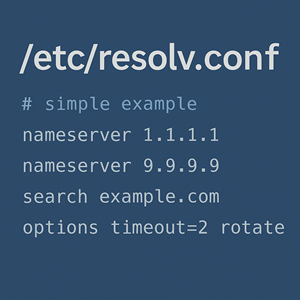
Understanding /etc/resolv.conf: Purpose, History, and Common Uses
/etc/resolv.conf is a tiny file with an outsized impact: it tells your Linux resolver which DNS servers to use, how to build hostnames, and how aggressive to be with retries and timeouts. This guide walks through its history, modern management with systemd and network managers, and practical tips for troubleshooting DNS.
Making PHP Think It’s on HTTPS (Even When It Isn’t)
When you move PHP sites behind a load balancer, reverse proxy, or CDN, the browser may connect over HTTPS while PHP only ever sees plain HTTP. That’s when URLs, cookies, and “force HTTPS” logic start misbehaving. In this article we explain how PHP actually detects HTTPS, why simply setting $_SERVER[‘HTTPS’] = ‘on’ is risky, and how to correctly configure Apache, nginx, and Plesk so your apps generate secure URLs and behave as if they’re truly running over HTTPS.
Git Reflog: Your Last Line of Defense When Everything Goes Wrong
Git has a reputation for being unforgiving, but it quietly keeps a trail of where your branches and HEAD have been. In this article we look at git reflog as your last line of defense—how to recover from hard resets, deleted branches, and bad rebases before they turn into real disasters.
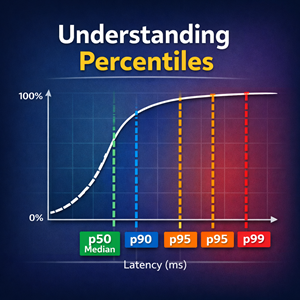
Min, Max, Mean, Average, P90, P95, and P99: What They Mean (and When to Use Them)
Percentiles like p90, p95, and p99 describe how slow things get for the “worst” slice of requests—something the mean often hides. This guide explains min, max, mean/average, and percentiles in plain language, plus when to use each in monitoring and SLOs.

Flowcharts Beyond the Basics with Mermaid
Go past “boxes and arrows” with Mermaid flowcharts. Learn subgraphs, layout tricks, reusable styling with classDefs, meaningful edge labels, link types, and a real-world deploy + drain example you can reuse in future posts.

Turning Text into Diagrams: An Introduction to Mermaid Flowcharts
Mermaid lets you turn plain text into clean, versionable diagrams that live right alongside your docs and code. In this post we walk through the basics of Mermaid flowcharts and show how to embed them in your blog or documentation, with practical examples you can copy and paste.
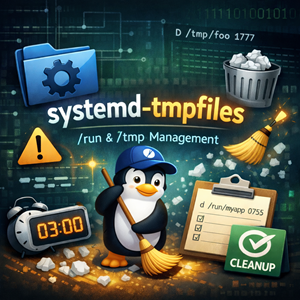
systemd-tmpfiles: The Unsung Janitor of /run and /tmp
How tmpfiles rules create runtime directories, enforce permissions, and clean up old files—plus safe patterns and practical examples.
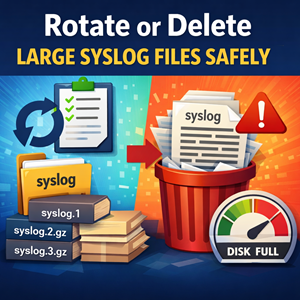
Rotate or delete an overgrown syslog file (safely)
If your /var/log/syslog (Debian/Ubuntu) or /var/log/messages (RHEL/CentOS/Alma/Rocky) has ballooned to multiple gigabytes, you’re usually seeing one of two things: a service spamming logs, or log rotation not running. The good news is you can reclaim space safely without breaking logging — as long as you avoid the classic trap of deleting a file that a daemon still has open. In this guide, we’ll walk through the safest options: rotating with logrotate, truncating in place, recovering space after an accidental rm, and (if needed) vacuuming systemd’s journal.
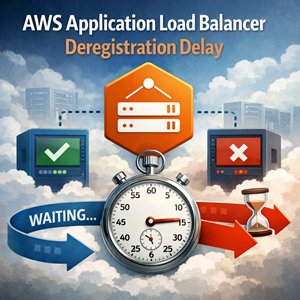
Deregistration Delay on AWS Application Load Balancers (ALB)
Learn what deregistration delay does in AWS Application Load Balancer target groups, how to configure it (Console/CLI/IaC), and recommended defaults for EC2 Auto Scaling, ECS, and EKS to reduce deploy and scale-in errors.
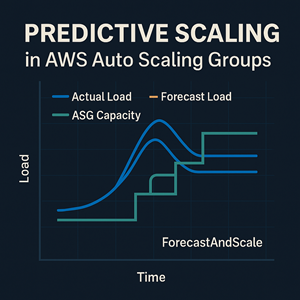
Predictive Scaling in AWS Auto Scaling Groups
AWS Predictive Scaling for EC2 Auto Scaling Groups forecasts your future demand from historical CloudWatch metrics and scales out ahead of time—ideal for workloads with daily or weekly traffic patterns. This article explains how it works, what it does (and doesn’t) do, and how to use it effectively alongside dynamic scaling.
systemd-cat: Logging to the Journal from the Command Line
systemd-cat is a simple way to route command output and pipelines into journald, making scripts and one-off maintenance runs searchable with journalctl.

Recording Terminal Sessions with the script Command
The classic Unix script command records your terminal sessions to a file—perfect for change logs, incident notes, reproducible runbooks, and support handoffs (as long as you treat the output like sensitive data).

Getting Started with GitHub CLI (gh): GitHub From Your Terminal
GitHub’s web UI is great, but it can feel slow when you live in a terminal. In this guide we introduce the GitHub CLI (gh), walk through installation and authentication, and show a few everyday commands that bring issues and pull requests straight into your shell.