
A DevOps Thanksgiving
As everyone heads home for turkey and pie, someone is still on call watching graphs, pipelines, and pagers. This light-hearted Thanksgiving poem tips its hat to the DevOps and SRE folks who ride out Black Friday and Cyber Monday so the rest of the world can shop in peace.
Debian: The Quiet Giant of the Linux World
If you’ve used Linux in the last 20 years, there’s a good chance you’ve met Debian—even if you didn’t realize it. This is the story of how a college student’s manifesto became one of the most quietly influential projects in the open-source world.
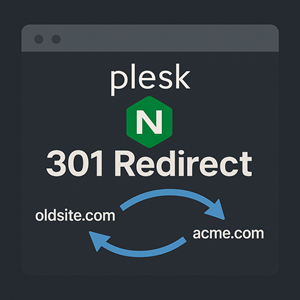
How to Add a Redirect in Nginx on a Plesk Server
Learn how to set up fast, server-level redirects on a Plesk server using Nginx “Additional nginx directives,” including full-domain redirects to acme.com, single-URL redirects, and common gotchas to avoid.

Domain Registration Explained: What It Means for Business Owners, Developers, and Network Engineers
When domain registration works, nobody thinks about it. When it fails, websites vanish, email stops, and trust evaporates. This article explains what a domain really is, why it matters, and how business owners, developers, and network engineers each see the same name from very different layers of the stack.

CloudFront Flat-Rate Plans: When AWS Bundles Are Actually a Good Deal
AWS finally did something nice with CloudFront pricing: flat-rate plans that bundle CDN, WAF, DNS, logging, and S3 credits into one predictable monthly bill. In this article we break down what each plan really includes, where the fine print bites, and how to decide if flat-rate actually saves money for your site.

Fixing “400 Bad Request – Request Header Or Cookie Too Large” on WordPress Sites (Plesk + Nginx)
Seeing “400 Bad Request – Request Header Or Cookie Too Large” on your WordPress site running on Plesk with Nginx? This guide explains what the error really means, how oversized cookies trigger it, how to fix the root cause in WordPress, and when it makes sense to adjust Nginx header limits.
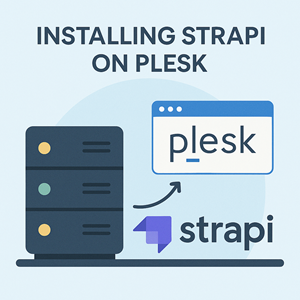
Installing Strapi on a Plesk Server (Ubuntu 24.04) with NVM, PM2, and Nginx
Strapi is a popular open-source headless CMS that lets you model content, manage it through a web admin, and expose it over APIs. In this guide we show how to run Strapi on a Plesk server (Ubuntu 24.04) using NVM, PM2, and Nginx, and how to configure ports so you can host multiple Strapi instances on the same box.
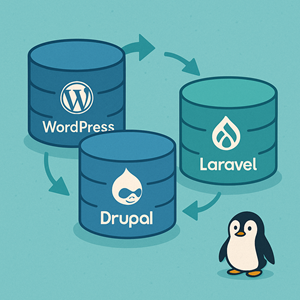
Database Migrations in WordPress, Drupal, and Laravel: Same Problem, Different Worlds
Database migrations mean very different things in WordPress, Drupal, and Laravel. In this article we compare how each platform handles schema changes, configuration, and environment moves—and what that means for your deployment workflow.

WordPress Database Migrations: Strategies, Tools & Anti-Patterns
WordPress hides most of the database work… until you move a site, add custom tables, or keep multiple environments in sync. This article walks through how WordPress handles schema changes, what you can control as a developer, the tools that help, and the migration anti-patterns to avoid.
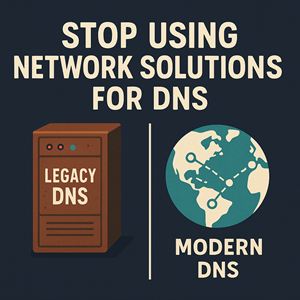
Stop Using Network Solutions for DNS (Seriously)
Network Solutions may have history, but as a DNS provider it’s stuck in the past. From a slow, clunky control panel and upsell-heavy “Premium DNS” to missing Anycast by default, broken apex/CNAME patterns, weak automation, and ticket-driven IPv6, we treat seeing Network Solutions in the NS records as a sign: it’s time to move.
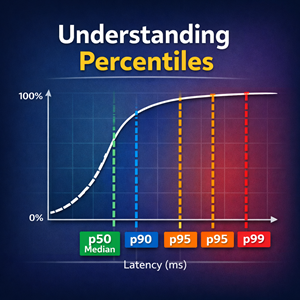
Min, Max, Mean, Average, P90, P95, and P99: What They Mean (and When to Use Them)
Percentiles like p90, p95, and p99 describe how slow things get for the “worst” slice of requests—something the mean often hides. This guide explains min, max, mean/average, and percentiles in plain language, plus when to use each in monitoring and SLOs.

Flowcharts Beyond the Basics with Mermaid
Go past “boxes and arrows” with Mermaid flowcharts. Learn subgraphs, layout tricks, reusable styling with classDefs, meaningful edge labels, link types, and a real-world deploy + drain example you can reuse in future posts.

Turning Text into Diagrams: An Introduction to Mermaid Flowcharts
Mermaid lets you turn plain text into clean, versionable diagrams that live right alongside your docs and code. In this post we walk through the basics of Mermaid flowcharts and show how to embed them in your blog or documentation, with practical examples you can copy and paste.
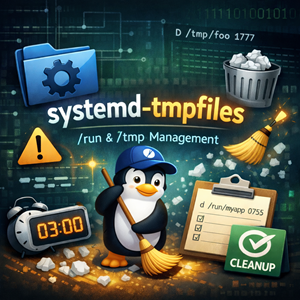
systemd-tmpfiles: The Unsung Janitor of /run and /tmp
How tmpfiles rules create runtime directories, enforce permissions, and clean up old files—plus safe patterns and practical examples.
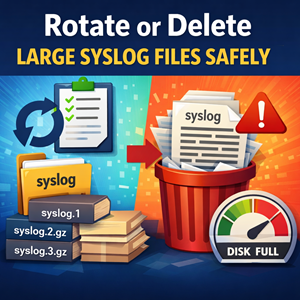
Rotate or delete an overgrown syslog file (safely)
If your /var/log/syslog (Debian/Ubuntu) or /var/log/messages (RHEL/CentOS/Alma/Rocky) has ballooned to multiple gigabytes, you’re usually seeing one of two things: a service spamming logs, or log rotation not running. The good news is you can reclaim space safely without breaking logging — as long as you avoid the classic trap of deleting a file that a daemon still has open. In this guide, we’ll walk through the safest options: rotating with logrotate, truncating in place, recovering space after an accidental rm, and (if needed) vacuuming systemd’s journal.
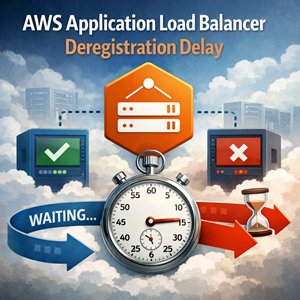
Deregistration Delay on AWS Application Load Balancers (ALB)
Learn what deregistration delay does in AWS Application Load Balancer target groups, how to configure it (Console/CLI/IaC), and recommended defaults for EC2 Auto Scaling, ECS, and EKS to reduce deploy and scale-in errors.
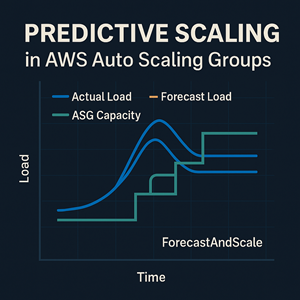
Predictive Scaling in AWS Auto Scaling Groups
AWS Predictive Scaling for EC2 Auto Scaling Groups forecasts your future demand from historical CloudWatch metrics and scales out ahead of time—ideal for workloads with daily or weekly traffic patterns. This article explains how it works, what it does (and doesn’t) do, and how to use it effectively alongside dynamic scaling.
systemd-cat: Logging to the Journal from the Command Line
systemd-cat is a simple way to route command output and pipelines into journald, making scripts and one-off maintenance runs searchable with journalctl.

Recording Terminal Sessions with the script Command
The classic Unix script command records your terminal sessions to a file—perfect for change logs, incident notes, reproducible runbooks, and support handoffs (as long as you treat the output like sensitive data).

Getting Started with GitHub CLI (gh): GitHub From Your Terminal
GitHub’s web UI is great, but it can feel slow when you live in a terminal. In this guide we introduce the GitHub CLI (gh), walk through installation and authentication, and show a few everyday commands that bring issues and pull requests straight into your shell.