
A DevOps Thanksgiving
As everyone heads home for turkey and pie, someone is still on call watching graphs, pipelines, and pagers. This light-hearted Thanksgiving poem tips its hat to the DevOps and SRE folks who ride out Black Friday and Cyber Monday so the rest of the world can shop in peace.

Debian: The Quiet Giant of the Linux World
If you’ve used Linux in the last 20 years, there’s a good chance you’ve met Debian—even if you didn’t realize it. This is the story of how a college student’s manifesto became one of the most quietly influential projects in the open-source world.
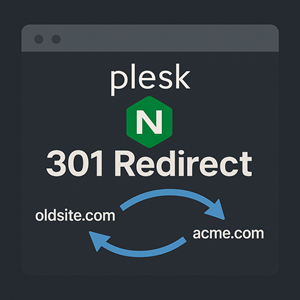
How to Add a Redirect in Nginx on a Plesk Server
Learn how to set up fast, server-level redirects on a Plesk server using Nginx “Additional nginx directives,” including full-domain redirects to acme.com, single-URL redirects, and common gotchas to avoid.

Domain Registration Explained: What It Means for Business Owners, Developers, and Network Engineers
When domain registration works, nobody thinks about it. When it fails, websites vanish, email stops, and trust evaporates. This article explains what a domain really is, why it matters, and how business owners, developers, and network engineers each see the same name from very different layers of the stack.

CloudFront Flat-Rate Plans: When AWS Bundles Are Actually a Good Deal
AWS finally did something nice with CloudFront pricing: flat-rate plans that bundle CDN, WAF, DNS, logging, and S3 credits into one predictable monthly bill. In this article we break down what each plan really includes, where the fine print bites, and how to decide if flat-rate actually saves money for your site.

Fixing “400 Bad Request – Request Header Or Cookie Too Large” on WordPress Sites (Plesk + Nginx)
Seeing “400 Bad Request – Request Header Or Cookie Too Large” on your WordPress site running on Plesk with Nginx? This guide explains what the error really means, how oversized cookies trigger it, how to fix the root cause in WordPress, and when it makes sense to adjust Nginx header limits.
Installing Strapi on a Plesk Server (Ubuntu 24.04) with NVM, PM2, and Nginx
Strapi is a popular open-source headless CMS that lets you model content, manage it through a web admin, and expose it over APIs. In this guide we show how to run Strapi on a Plesk server (Ubuntu 24.04) using NVM, PM2, and Nginx, and how to configure ports so you can host multiple Strapi instances on the same box.
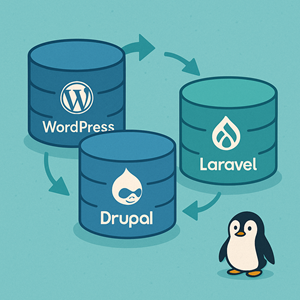
Database Migrations in WordPress, Drupal, and Laravel: Same Problem, Different Worlds
Database migrations mean very different things in WordPress, Drupal, and Laravel. In this article we compare how each platform handles schema changes, configuration, and environment moves—and what that means for your deployment workflow.

WordPress Database Migrations: Strategies, Tools & Anti-Patterns
WordPress hides most of the database work… until you move a site, add custom tables, or keep multiple environments in sync. This article walks through how WordPress handles schema changes, what you can control as a developer, the tools that help, and the migration anti-patterns to avoid.
Stop Using Network Solutions for DNS (Seriously)
Network Solutions may have history, but as a DNS provider it’s stuck in the past. From a slow, clunky control panel and upsell-heavy “Premium DNS” to missing Anycast by default, broken apex/CNAME patterns, weak automation, and ticket-driven IPv6, we treat seeing Network Solutions in the NS records as a sign: it’s time to move.
Understanding RTO And RPO For Managers
When a key system suddenly goes down, you’re not looking for a technical root cause—you’re trying to understand impact: time, money, and trust. Concepts like Recovery Time Objective (RTO) and Recovery Point Objective (RPO) give managers a clear, non-technical way to talk about how long the business can afford to be offline and how much data it can safely risk.
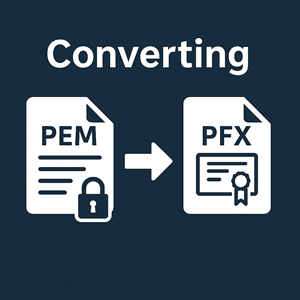
Converting AWS ACM PEM Certificates to PFX for Windows IIS
When AWS Certificate Manager hands you a bundle of PEM files and your Windows admin demands a .pfx, it can feel like two different worlds colliding. In the cloud and Linux ecosystem, PEM is the natural format for TLS: simple text files that are easy to script, inspect, and deploy. Windows and IIS, on the other hand, live in a certificate-store universe where PFX rules. In this article we walk through the quick OpenSSL conversion from PEM to PFX, then dig into why these formats exist, why AWS only gives you PEM, and what you gain (and lose) when you move everything into a .pfx file.

Beyond Apache and Nginx: A Brief History of Web Servers and the Unsung Daemons
When we talk about web servers, the story usually stops at Apache and Nginx. But the web was shaped by a long line of lesser-known daemons—from thttpd and lighttpd to Zeus, Cherokee, Caddy, and H2O—that quietly pioneered performance, automation, and new HTTP protocols behind the scenes.
Apache vs Nginx: A Tale of Two Web Servers
Apache and Nginx power a huge share of the modern web, but they were born in very different eras to solve very different problems. This article traces their histories from NCSA HTTPd and the C10k problem through to today’s hosting stacks, then compares their architectures, strengths, weaknesses, and ideal use cases.
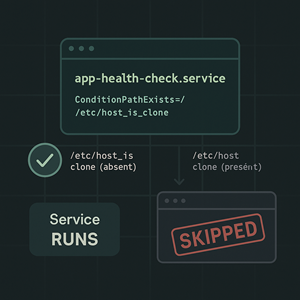
Using ConditionPathExists and Friends in systemd Units
Systemd can do more than just start and restart services. With unit conditions like ConditionPathExists, you can make services environment-aware: skip jobs on cloned hosts, only run backups when a volume is mounted, or gate first-boot tasks — all without shell wrappers.

How to Export a DNS Zone File from Plesk (for Migrations, Backups, and Audits)
Need a clean DNS zone file out of Plesk for a migration or backup? In this guide, we walk through exporting zone files via the Plesk UI with the Transfer of DNS Records extension and directly from the server’s BIND configuration, with notes on common pitfalls and how to use the exported file.

Using PHP APCu on Plesk: Installation, Tuning, and Pitfalls
APCu is a lightweight in-memory cache for PHP that can dramatically cut database and API load on Plesk-based servers. In this guide we walk through what APCu is, how to install it against Plesk’s PHP builds, how to enable and tune it per domain, and what pitfalls to watch for so you don’t accidentally starve your VPS of memory or end up with a thrashing cache.
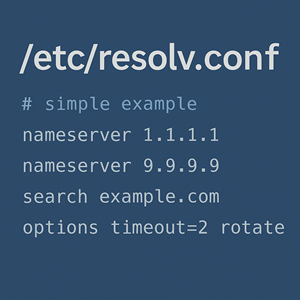
Understanding /etc/resolv.conf: Purpose, History, and Common Uses
/etc/resolv.conf is a tiny file with an outsized impact: it tells your Linux resolver which DNS servers to use, how to build hostnames, and how aggressive to be with retries and timeouts. This guide walks through its history, modern management with systemd and network managers, and practical tips for troubleshooting DNS.
Making PHP Think It’s on HTTPS (Even When It Isn’t)
When you move PHP sites behind a load balancer, reverse proxy, or CDN, the browser may connect over HTTPS while PHP only ever sees plain HTTP. That’s when URLs, cookies, and “force HTTPS” logic start misbehaving. In this article we explain how PHP actually detects HTTPS, why simply setting $_SERVER[‘HTTPS’] = ‘on’ is risky, and how to correctly configure Apache, nginx, and Plesk so your apps generate secure URLs and behave as if they’re truly running over HTTPS.
Git Reflog: Your Last Line of Defense When Everything Goes Wrong
Git has a reputation for being unforgiving, but it quietly keeps a trail of where your branches and HEAD have been. In this article we look at git reflog as your last line of defense—how to recover from hard resets, deleted branches, and bad rebases before they turn into real disasters.